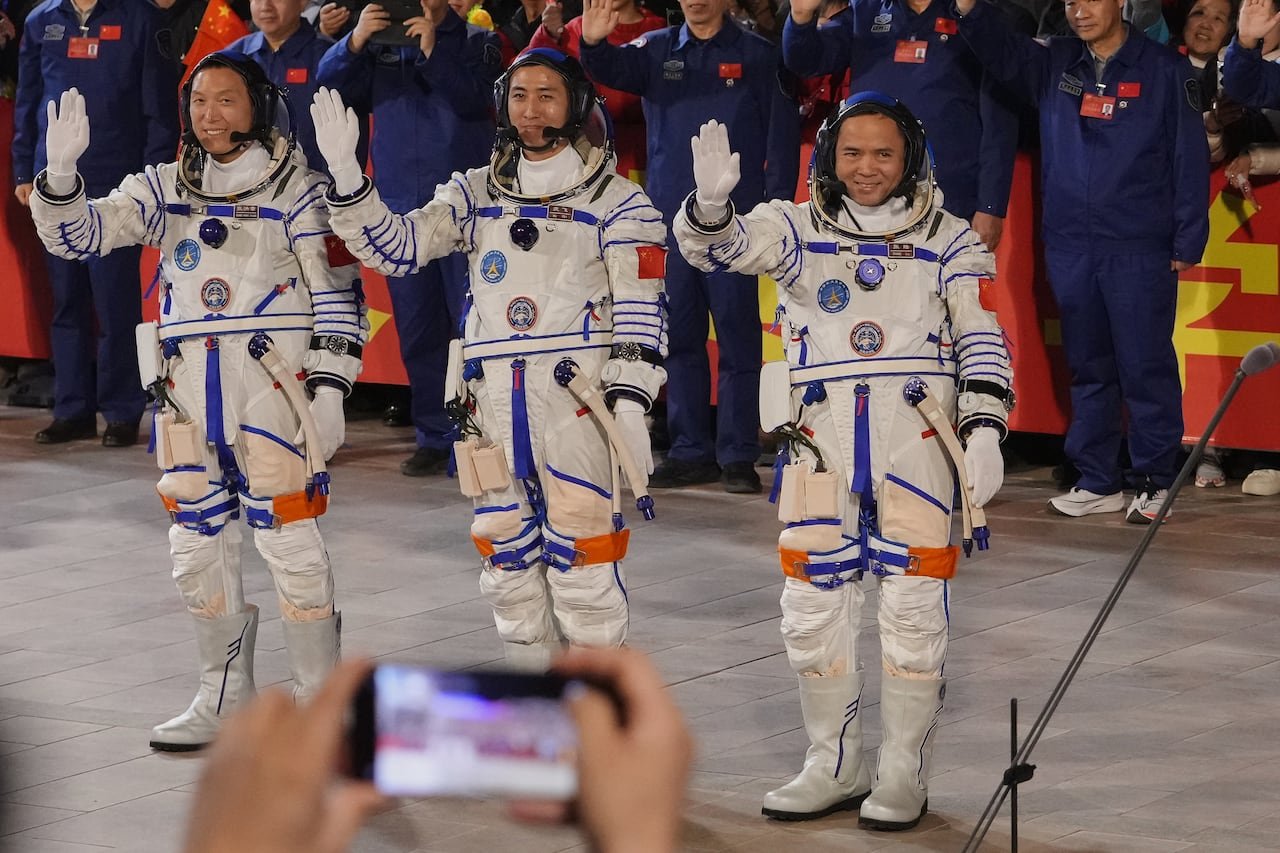
The Artemis program led by NASA has garnered attention for its objective to send astronauts on a mission around the moon. However, underlying this mission is a broader strategic competition between the United States and China to reintroduce humans to the lunar surface.
This time, the rivalry extends beyond planting flags and footprints. The nation that achieves this milestone first could hold a significant advantage in selecting prime locations for future lunar infrastructure, establishing technical standards, and shaping the next phase of space exploration.
During NASA’s Ignition event last week, officials emphasized the urgency of this competition. NASA aims to land Americans on the moon before China and before the conclusion of U.S. President Donald Trump’s term.
Jared Isaacman, the billionaire designated by Trump to lead NASA, highlighted the stakes: “NASA has committed to returning Americans to the moon before the end of President Trump’s term. Our main competitor has set a target before 2030.”
“The difference between success and failure will be determined in months, not years.”
- Cross Country Checkup is asking: Why does space exploration matter to you? Leave your comment here and we may read it or call you back for Sunday’s show
Thus, the race is officially on, at least from a political standpoint. NASA is fast-tracking its plan to land Americans on the moon by early 2028, while Wu Weiren, chief designer of China’s lunar program, has affirmed, “By 2030, the Chinese people will undoubtedly set foot on the moon. That is assured.”

Casey Dreier, chief of space policy at the Planetary Society, doubts the feasibility of the 2028 deadline. Nonetheless, he acknowledges that China has become a useful motivator for NASA and its supporters.
“China has been steadily advancing its lunar spaceflight ambitions,” he noted. “Their objective for numerous years now has been to land astronauts on the moon’s surface and establish a lunar base… This serves as a rallying point for political backing.”
A marathon, not a sprint
The United States has made previous pledges to return to the moon. In 2019, then-Vice President Mike Pence pledged that American astronauts would revisit the lunar surface by 2024. However, shifting political priorities caused that deadline to lapse.
Some analysts perceive China as holding an edge in this competition.
Dean Cheng, a senior fellow at the Potomac Institute for Policy Studies and a seasoned expert on China’s space program, characterizes this new race as a prolonged effort, not a swift sprint. The objective this time is not merely to visit the moon but to establish a sustained presence.
“One notable aspect of the Chinese space program is their cautious approach to making predictions,” Cheng remarked. “But the ones they do make, they unfailingly fulfill.”
This is why, according to Cheng, China’s 2030 goal carries substantial significance.