
The issue of nuclear weapons testing has resurfaced after a prolonged period of dormancy. Recently, Russia tested a missile powered by nuclear energy without detonating an actual bomb. In response, President Donald Trump announced that the U.S. would recommence nuclear weapons testing.
In the 21st century, North Korea stands as the sole country to have carried out nuclear weapons tests, all of which were conducted underground. The last nuclear test by the U.S. took place in 1992, while Russia’s last test was in 1990, and China ceased testing in 1996.
The most dramatic nuclear tests occurred during the open-air testing era in the late 1940s and 1950s, producing iconic and frightening images of the nuclear era. The mushroom cloud has since become a symbol of the nuclear threat.
The long-lasting repercussions of these tests persist. The U.S. tests on Bikini Atoll in the Pacific were among the largest ever conducted, rendering the area uninhabitable due to radioactive contamination.
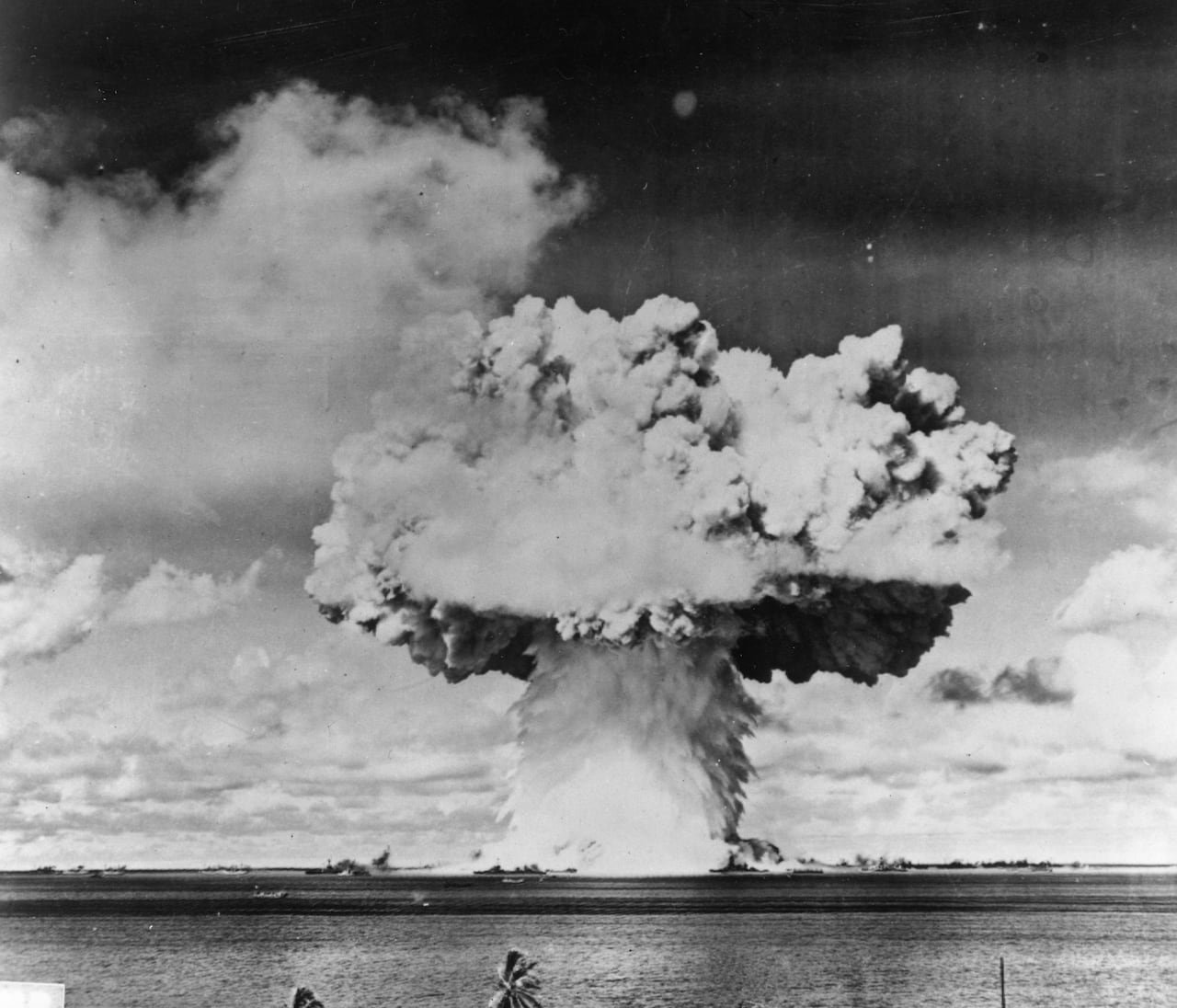
Most atmospheric testing ceased in 1963 with the agreement of the Partial Test Ban Treaty by the U.S., Soviet Union, and others. While lacking specific verification mechanisms, the treaty successfully halted such testing. Both the U.S. and the Soviets discontinued the practice thereafter. However, France persisted in above-ground testing until 1974, and China until 1980.
Factors leading to the cessation of testing (almost)
Throughout the 1980s, underground testing continued among major powers, curbing the dispersion of radioactive fallout. Nevertheless, a movement emerged to completely halt such testing.
In 1992, the U.S. implemented its own testing moratorium. Subsequently, in 1996, the United Nations adopted the Comprehensive Nuclear-Test-Ban Treaty (CTBT), prohibiting all nuclear test explosions in any environment.
As part of the treaty, a global monitoring system was established to detect any nuclear tests. Numerous sites worldwide monitor seismic activity, oceanic sound waves, and atmospheric radiation to prevent clandestine testing. This system has successfully identified all of North Korea’s tests.
However, the CTBT has not come into full effect due to insufficient ratifications, including from major nuclear powers and others such as the U.S., Russia, China, India, Pakistan, Israel, Iran, Egypt, and North Korea.

More like thisRelated
“Canada Boosts Reproductive Health Funding by $5.4M”

Blue Jays Sign Japanese All-Star Okamoto to $60M Deal
“NASA’s Astronaut Mike Fincke Reveals Medical Emergency in Space”
“Dust Pollution Crisis in Fort McKay Exceeds Air Quality Guidelines”