
Some homebuyers who took the chance of purchasing a home before its construction completion as a strategy to secure a spot in a pricey market are now grappling with the consequences of declining property values.
Increasing numbers of Canadians, particularly in condo markets like Toronto, are realizing the harsh reality that developers and lenders are not willing to bear the financial loss when property values decrease.
One individual, Vitor Almeida, a carpenter and former real estate agent, is currently facing this situation. Over five years ago, he agreed to buy a pre-construction condo in Vaughan, Ont., for $675,000, with a 20% down payment. However, the appraisal of the condo years later showed a value of $590,000, making it challenging for Almeida to secure a mortgage to complete the purchase.

With the average selling price of condos in the Greater Toronto Area declining by more than five percent towards the end of 2025 compared to the previous year, the situation is becoming increasingly challenging for buyers.
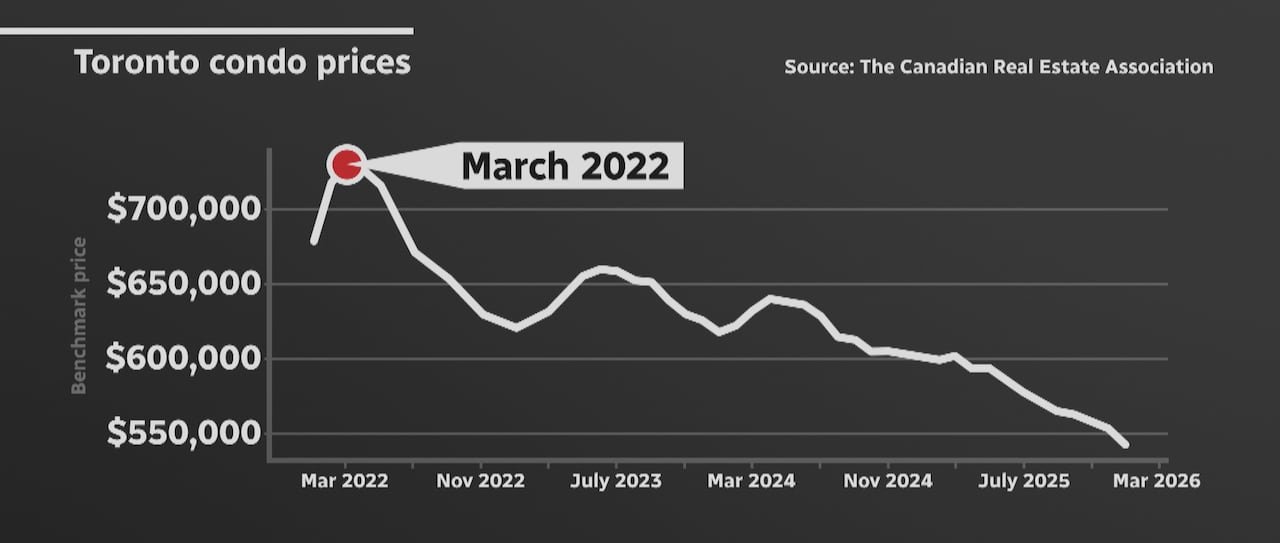
For buyers like Almeida, the options are limited if they cannot bridge the gap between the appraised value and the agreed-upon price. In such cases, the builder can retain the deposit and any fees paid by the buyer, potentially leading to additional financial obligations.
Real estate experts emphasize the challenges faced by buyers in declining pre-construction markets, suggesting that finding alternatives is not easy. Attempting to assign the property to another buyer can incur additional costs and complications, as highlighted by real estate lawyer Gathya Manoharan.
According to Mortgage broker Ron Butler, buyers may face legal consequences if they fail to fulfill their contractual obligations due to the valuation discrepancies. He anticipates a peak in such issues in 2026 in Toronto, with a significant disparity between purchase prices and market values.
Addressing the complexities of the current real estate landscape, experts caution buyers against following market trends blindly and stress the importance of understanding the risks associated with long-term commitments made in volatile markets.
Academic Diana Mok suggests that regulating such market risks is challenging and draws parallels with the stock market, emphasizing the need for buyers to exercise caution and avoid impulsive investment decisions based on market trends.

