
Didn’t have time to keep up this week? No worries. CBC’s Marketplace has you covered with the latest consumer and health news.
Prefer updates in your inbox? Sign up for the Marketplace newsletter every Friday.
Online Predators Targeting Young Boys in Sextortion Scam Revealing Lucrative Gains

Warning: This story includes discussion of suicide.
“John,” a self-proclaimed fraudster, spends his days coaxing money out of unsuspecting individuals.
“We track them down on platforms like Facebook or Instagram,” John revealed to CBC’s Marketplace. “We check out celebrities’ and followers’ accounts, then we connect with them.”
Part of the “Yahoo Boys” group in Nigeria, John and his associates manipulate teenagers into sending compromising photos, later extorting money from them.
John, a pseudonym, resides in Lagos and agreed to provide insights to Marketplace in confidence, shedding light on the operations of these scammers.
Since 2021, instances of sexual extortion, commonly known as sextortion, have surged in Canada. Reports show over 40 suicides in North America, Australia, and the U.K. in the past four years linked to sextortion, with five cases in Canada.
Paul Raffile, a specialist in sextortion and cybercrime from Connecticut, condemned this form of exploitation as one of the most egregious scams, targeting and coercing children into compromising situations for financial gain.
To assess social media platforms’ defenses against sextortion, journalists from Marketplace set up three fake teenage boy profiles on Instagram, using photo-editing tools to modify their appearances. The profiles were designed to blend in with suspected sextortionist circles, following accounts frequented by these offenders, as noted by Raffile.
Find out more from the Marketplace team.
- Tune in to ‘The Sextortion Network’ this Friday at 8 p.m. (8:30 in N.L.) on YouTube, CBC TV, and CBC Gem for the full investigation.
‘Offensive’ Term “Wife Beater” Still Used for Tank Tops on Amazon, Violating Canadian Standards
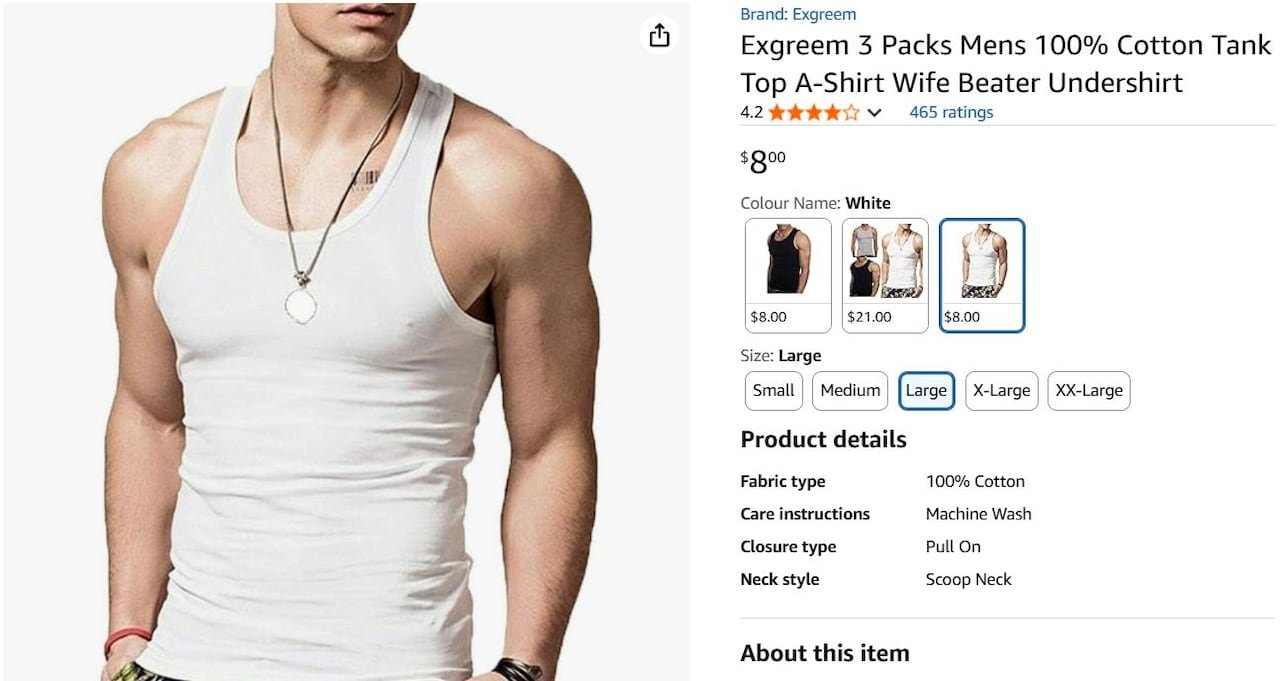
Numerous ads for men’s tank tops featuring the term “wife beater” are still visible on Amazon’s Canadian platform, despite a ruling by the Ad Standards Council deeming the phrase offensive, trivializing domestic abuse, and violating advertising regulations in Canada.
The term originated in the 1930s to describe a style of tight-fitting men’s

