
Amid a persistent cold spell in southwestern Ontario and a concurrent scarcity of road salt in municipalities, there is a growing emphasis on exploring alternative methods to dissolve road ice.
Researchers at Western University initiated a study in 2022 to investigate this issue, with the expectation of unveiling the study findings later this summer.
The research is examining nine different substances to evaluate their efficacy in melting road ice across different circumstances.

According to Christopher Power, an associate professor involved in the study, sodium chloride (commonly known as rock salt) has been the preferred choice for Ontario municipalities primarily due to its affordability.
He stated, “It’s abundant and easily obtainable, making it a cost-effective solution, especially considering the quantities required by each municipality.”
Environmental Impact of Salt Usage
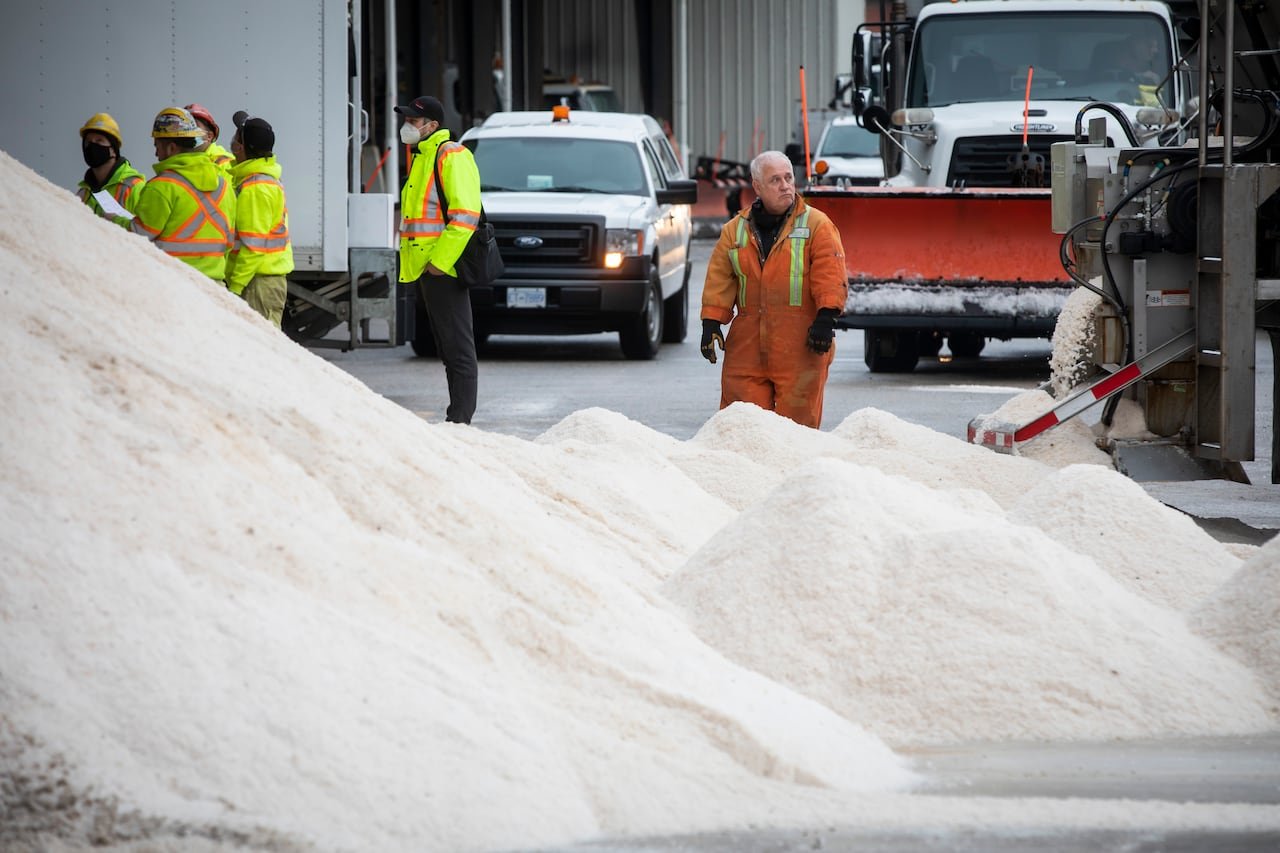
Power highlighted that rock salt effectively clears ice from roads by reducing the freezing point of water, thereby melting existing ice and hindering the formation of new ice.
Despite its effectiveness, salt has well-documented drawbacks. Its corrosive nature can reduce the lifespan of metal structures like bridges, guardrails, and vehicles in proximity to treated roads.
Moreover, the environmental repercussions are significant, as a considerable amount of salt used on roads ends up in water bodies, including rivers, streams, and the Great Lakes. Experts have raised concerns about the accelerated salinization of the Great Lakes due to excessive salt influx.
Power warned, “At the current pace, the Great Lakes may face increased salinity levels, negatively impacting freshwater ecosystems.”
He also mentioned that rock salt’s effectiveness diminishes around -10°C.
Among the alternative ice-melting substances under investigation at Western University, some are already being employed in various applications, such as sodium acetate and beet juice.
Part of the study involved cordoning off sections of Western University’s campus to allow the grounds crew to test different substances for ice removal.
While the study phase has concluded, Power and his team are currently analyzing the data, including the melting efficiency and corrosive properties of each substance.
<figcaption

