
Three scientists, Karl Deisseroth, Peter Hegemann, and Georg Nagel, have been awarded the 2026 Nobel Prize in Physiology or Medicine for their groundbreaking work on light-gated ion channels and optogenetics, as announced by the Nobel Assembly at Karolinska Institutet in Stockholm on Monday.
Optogenetics is a revolutionary technique that enables the manipulation of individual nerve cell activity in a live brain, allowing researchers worldwide to unlock the mysteries of the brain, stated Thomas Perlmann, the secretary general of the Nobel Assembly at Karolinska Institutet.
The trio, comprising 54-year-old American Deisseroth, 71-year-old German Hegemann, and 73-year-old German Nagel, expressed their surprise and joy at being honored together. They emphasized the honor of receiving the prestigious award alongside their esteemed colleagues.
The Nobel Prize carries a monetary award of 12 million Swedish crowns ($1.7 million Cdn), which will be shared among the three laureates. Deisseroth is affiliated with Stanford University in California, Hegemann with Humboldt University in Berlin, and Nagel with the University of Wurzburg in Germany.
Anna Wedell, a genetics professor and Nobel committee member, highlighted the dawn of a new era in neuroscience with the potential for deeper insights into how the brain processes information and the interactions among different neurons.
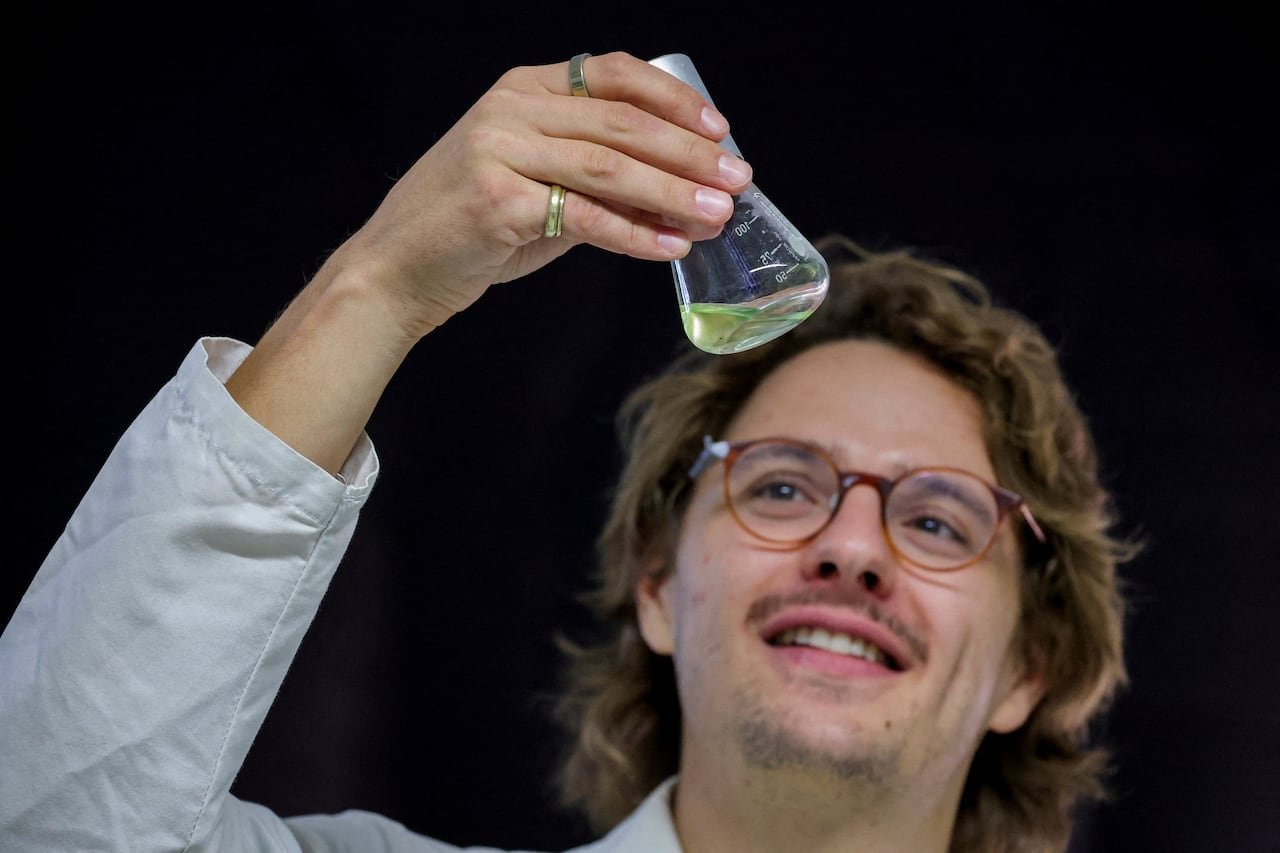
In ongoing clinical trials, researchers are restoring vision in individuals with retinitis pigmentosa, a condition causing blindness, by introducing a light-sensitive protein into the retina. Additionally, optogenetics holds the potential to enhance cochlear implants for more precise stimulation of the auditory nerve compared to existing electrical devices.
Per Svenningsson, a neurology professor at Karolinska Institute in Sweden, explained how optogenetics activates healthy cells in the retina to stimulate the optic nerve and generate visual perception in the brain for patients losing photoreceptors.
Decades of Progress
In the early 1990s, Hegemann’s research on the alga Chlamydomonas led to the discovery of channelrhodopsin-2, an ion channel activated by light. Deisseroth later demonstrated the application of this protein to generate electrical impulses in human and hamster cells using light, coining the term “optogenetics” in 2006.
Deisseroth emphasized the collaborative spirit among the laureates, underscoring their shared journey of discoveries and mutual respect.
Originally aspiring to be a neurosurgeon, Deisseroth transitioned to psychiatry driven by a quest to understand the underlying causes of conditions like depression and autism.
The Nobel Prizes for chemistry and physics will follow on subsequent days, with literature awarded on Thursday and the peace prize on Friday. The economics prize recipient will be announced on October 12.
The Nobel Prize was established by Alfred Nobel, a Swedish inventor known for dynamite, who bequeathed his fortune to fund awards recognizing those who have made significant contributions to humanity.

