
On Thursday, Sudan’s paramilitary Rapid Support Forces (RSF) announced their acceptance of a proposal from the United States and Arab nations aimed at establishing a humanitarian ceasefire, indicating their willingness to engage in discussions regarding a halt to hostilities.
Throughout their 2½-year conflict, the RSF and the Sudanese army have considered multiple ceasefire proposals, yet none have been successfully implemented. The administration of U.S. President Donald Trump has stated its commitment to ending the violence in Sudan.
The RSF’s statement, which did not elicit an immediate response from the Sudanese army, follows the group’s recent capture of El Fasher, a city suffering from famine that has endured a blockade for over 18 months. This city was the last military bastion of Sudan in the western Darfur region.
According to the RSF, “We also look forward to executing the agreement and promptly beginning discussions regarding the terms for a cessation of hostilities and the core principles that will guide Sudan’s political process.”
Earlier this week, the Security and Defense Council, led by the army, convened but did not provide a conclusive response to the proposal, despite some key leaders and allies within the army expressing dissent.
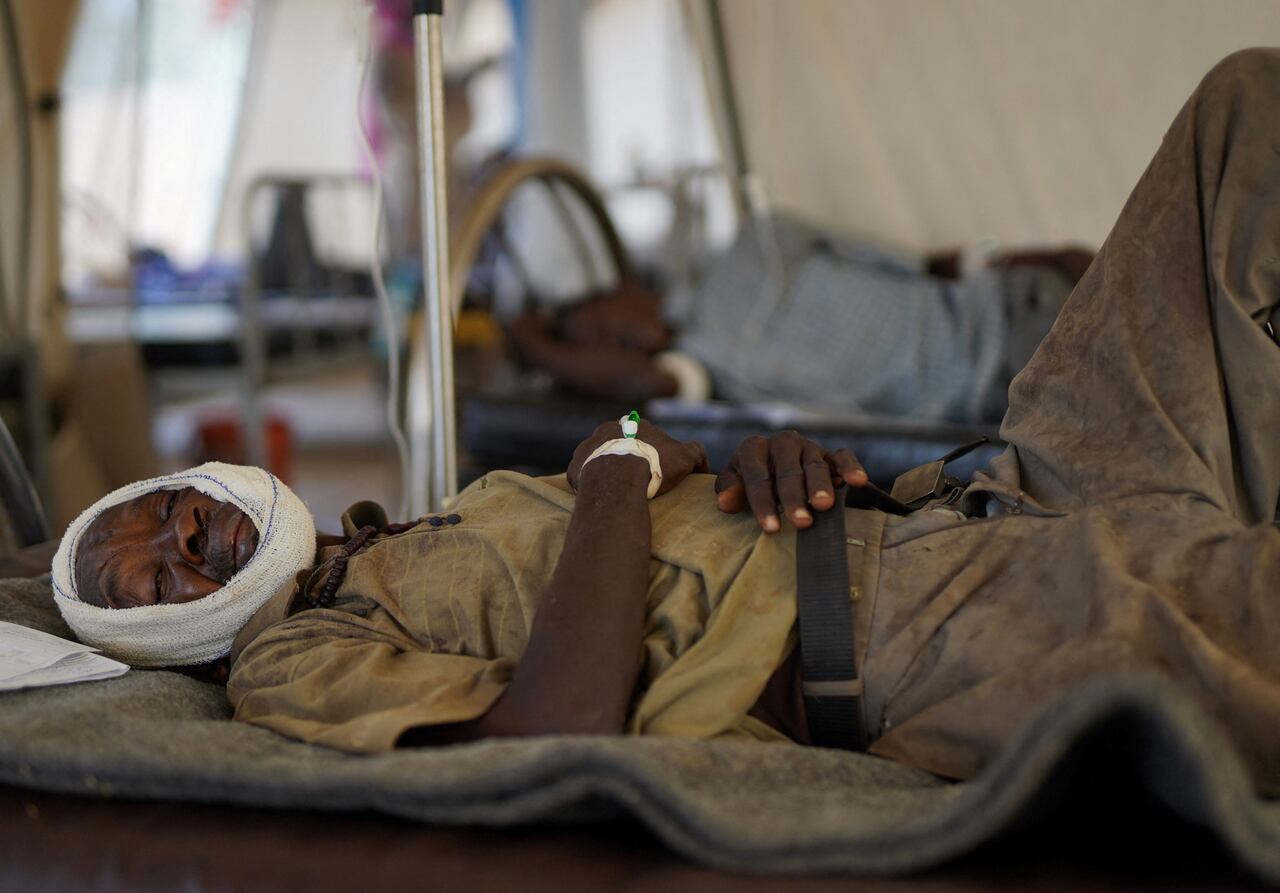
An injured and displaced Sudanese man receives treatment in Twila, North Darfur, after fleeing the violence in El Fasher. (Mohamed Jamal/Reuters)
A military representative from Sudan informed The Associated Press that the army is supportive of the proposal but will only agree to a ceasefire if the RSF withdraws completely from civilian zones and relinquishes their weapons, as stipulated in earlier peace agreements. The official requested anonymity to discuss the situation.
Massad Boulos, a U.S. advisor focusing on African affairs, stated that efforts are underway with both the Sudanese army and RSF to establish a humanitarian truce, with an announcement potentially forthcoming “soon.”
“We have been working on this for almost ten days with both parties, aiming to finalize the specifics,” Boulos shared with AP during an interview on Monday. He noted that the U.S.-led initiative would commence with a three-month humanitarian ceasefire, followed by a nine-month political process.
Thousands dead, millions displaced: WHO
The conflict between the RSF and the military ignited in 2023, sparked by rising tensions between the former allies who were intended to oversee a democratic transition following a 2019 uprising.
According to the WHO, the fighting has resulted in the deaths of at least 40,000 individuals and displaced around 12 million. Nevertheless, aid organizations indicate that the actual death toll could be significantly higher. Additionally, over 24 million people are currently facing severe food shortages, as reported by the World Food Program.
Humanitarian agencies have consistently identified Sudan as a region experiencing one of the most severe displacement crises globally. Recently, further displacement occurred after the RSF’s takeover of El Fasher, following a wave of attacks by the group throughout the city.
Witnesses have reported that the RSF killed and abducted civilians during and after their seizure of El Fasher, including cases of summary executions, raising international alarm.
Last week, the U.N. human rights office estimated that hundreds of civilians and unarmed combatants may have been executed during the RSF’s takeover of El Fasher, an act regarded as a war crime.
Several eyewitnesses relayed to global medical charity Doctors Without Borders that approximately 500 civilians and soldiers from the Sudanese Armed Forces and affiliated groups attempted to escape on October 26, but the majority were either killed or captured by the RSF and their allies.
“Survivors reported being separated based on gender, age, or perceived ethnic identity, with many remaining under detention for ransom, with demands ranging from 5 million to 30 million Sudanese pounds (approximately $11,000 to $70,000 CAD),” stated MSF in a report last week.
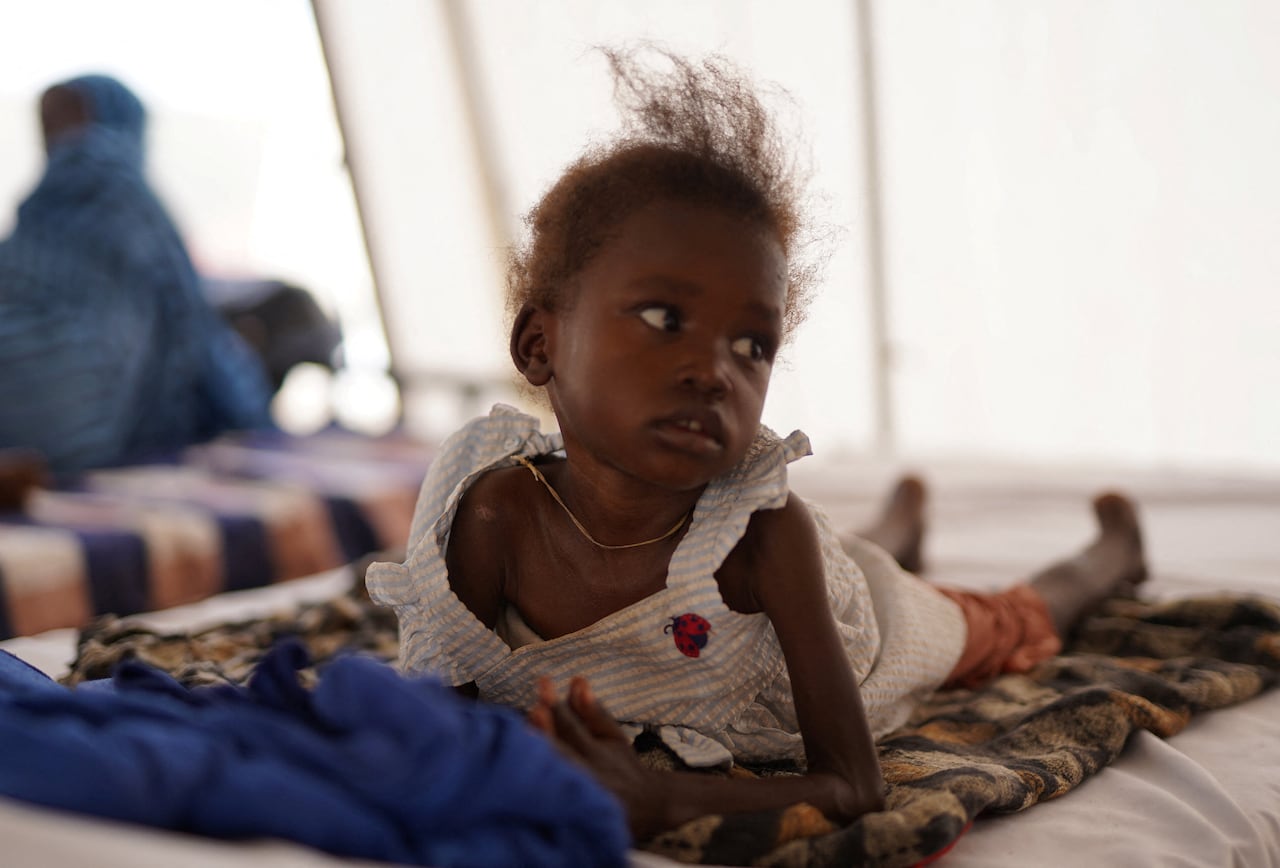
A Sudanese girl lies inside a makeshift clinic run by Doctors Without Borders in Tawila after fleeing El Fasher. (Mohamed Jamal/Reuters)
Reuters has authenticated at least three videos circulating on social media that depict RSF-affiliated men shooting unarmed captives, along with several others showing groups of bodies following apparent shootings.
A senior RSF commander dismissed these claims as “media exaggeration” by the army and its allied fighters “to obscure their defeat and loss of El Fasher.”
The RSF leadership has initiated investigations into any misconduct by its personnel, and several individuals have been apprehended, the commander indicated, adding that the RSF has assisted individuals in evacuating the city and urged aid organizations to support those who remain.
He asserted that soldiers and fighters posing as civilians had been detained for questioning. “No killings occurred as alleged,” the commander stated to Reuters in response to a request for comment.
A ‘man-made’ famine
In a statement on Thursday, the nonprofit organization Islamic Relief cautioned that community kitchens, essential for many families, are on the verge of collapse. A recent survey conducted by the organization revealed that 83 percent of families in eastern and western Sudan are currently lacking adequate food supplies.
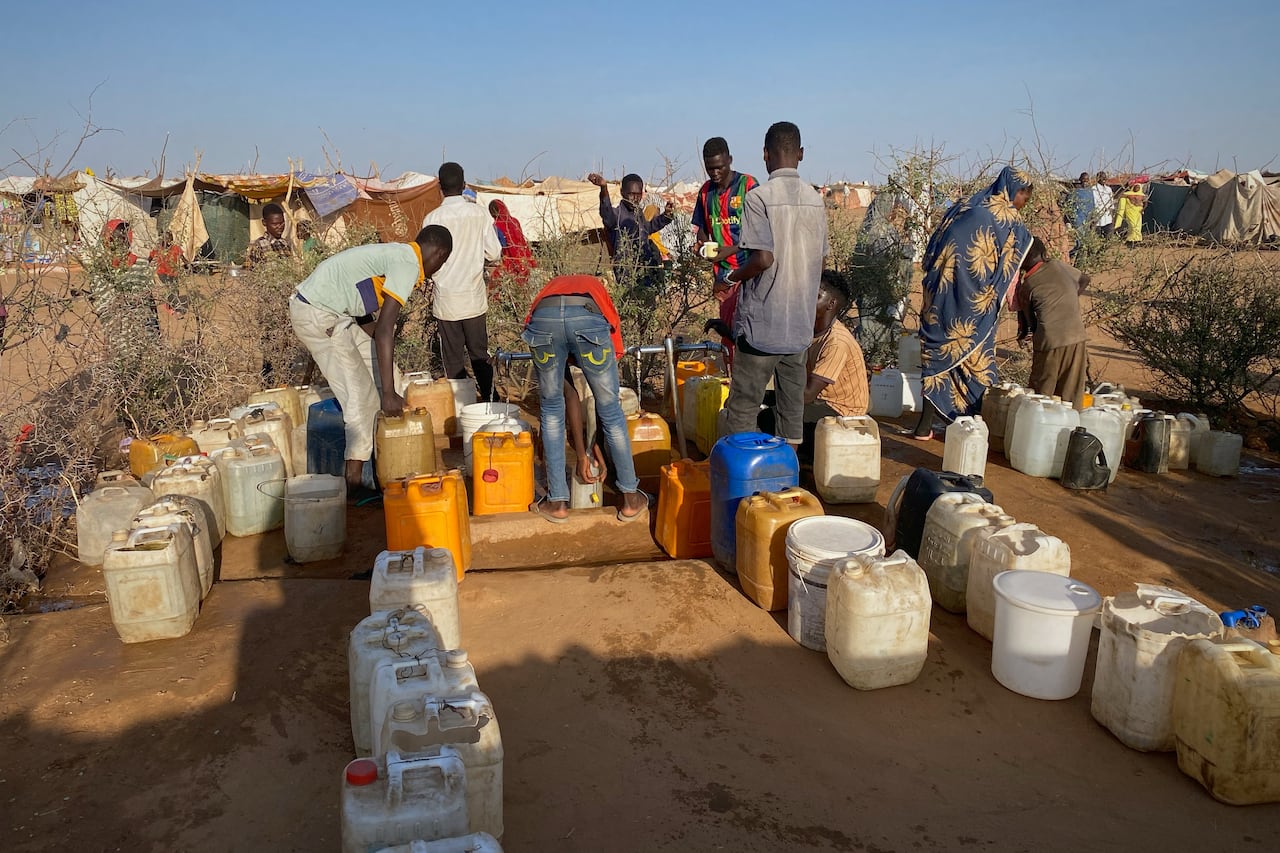
Sudanese men collect water at a camp in Tawila after fleeing El Fasher city. (Mohammed Bakry/The Associated Press)
El-Fasher, the capital of North Darfur, is among two regions facing famine, according to the Integrated Food Security Phase Classification, a global hunger monitoring organization, which reported this on Monday. The other affected area is the town of Kadugli in South Kordofan province.
“It is essential to confirm that the primary cause of this famine is man-made. We are not dealing with natural disasters, but rather an ongoing conflict, instability, the inability to access food, and a lack of humanitarian corridors that would allow those in dire need to receive aid,” explained AbdulHakim Elwaer, the regional representative for Near East and North Africa.
Elwaer mentioned during a video call with The Associated Press on Thursday that discussions have been ongoing for nearly two years regarding the facilitation of aid delivery to communities in need by establishing secure humanitarian corridors.
“I am hopeful that we will reach a resolution by the end of the year, as a solution is imperative; we cannot permit millions of individuals to perish from hunger due to the lack of aid,” he stated.

