
Following the strike on the Mina Al-Ahamadi oil refinery in Kuwait by Iranian Shahed drones last Friday, President Volodymyr Zelenskyy of Ukraine announced that Kyiv has dispatched over 200 military experts to the Middle East to assist in safeguarding vital infrastructure against threats similar to those Ukraine has encountered for several years.
Zelenskyy revealed that 228 Ukrainian drone experts have been sent to five nations: Qatar, the United Arab Emirates, Saudi Arabia, Kuwait, and Jordan.
Since the U.S. and Israel initiated airstrikes against Iran on February 28, Gulf Arab nations have faced attacks involving more than 2,000 drones and missiles.
These countries, which have experienced assaults on their energy infrastructure, hotels, and diplomatic facilities, are also eager to acquire thousands of Ukraine’s interceptor drones. Kyiv reports that “serious agreements and deals” are currently being negotiated.
Andrii Sych, co-founder of the Kyiv-based UV military cluster, which manufactures drones and collaborates with other companies in the field, stated, “In the past week alone, we received four distinct requests for interceptors from the Middle East.”
“The demand is indeed quite substantial,” he added.
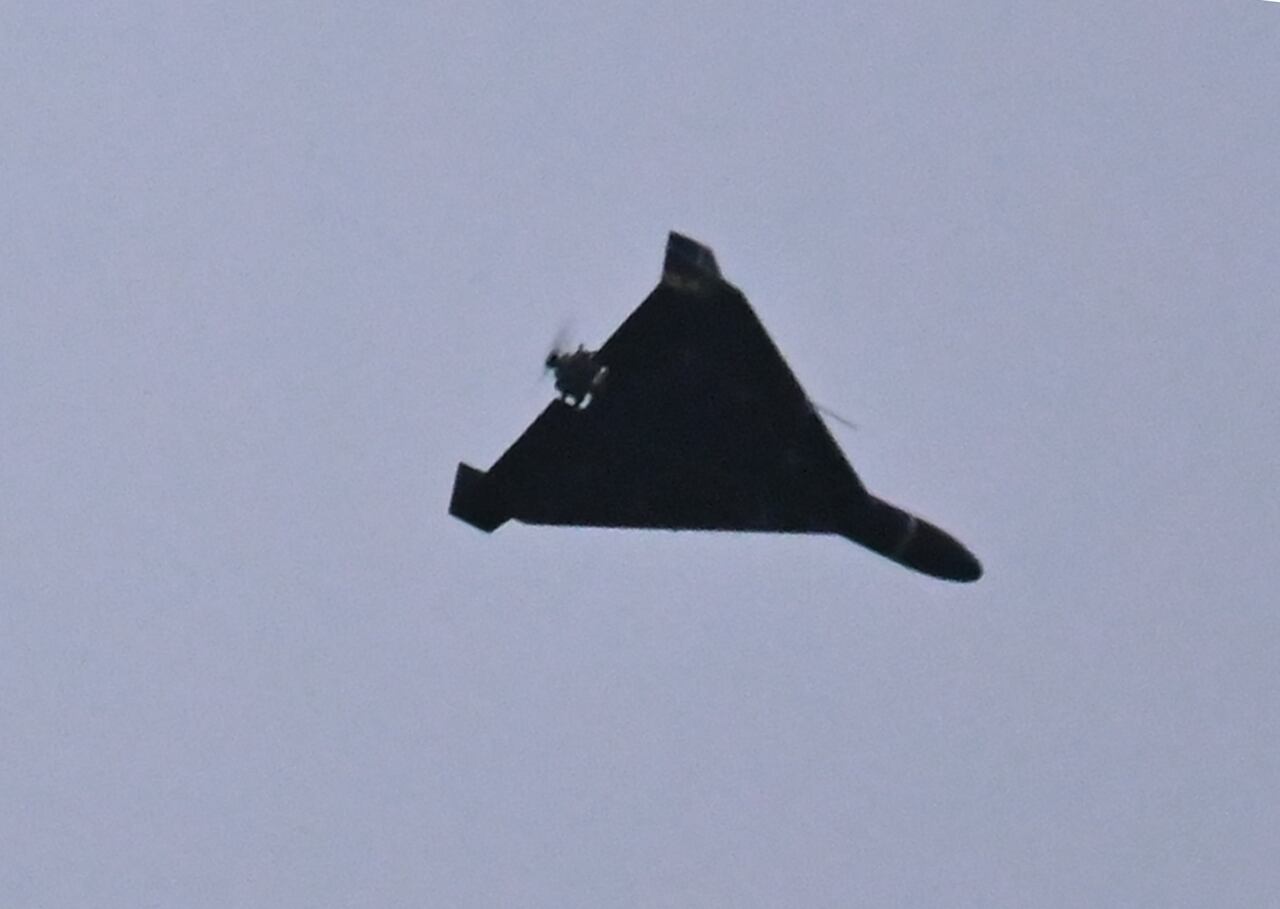
An Iranian-designed Shahed 136 (Geranium-2) drone used by the Russian army flies over Kyiv during a Russian attack on December 27, amid the ongoing invasion of Ukraine. ( Sergei Supinsky/AFP/Getty Images)
He informed CBC News that one of the requests originated from the United Arab Emirates, although the manufacturer has yet to officially sell any interceptors due to the necessity of obtaining an export license from Kyiv and authorization to sell defense technology internationally.
Ukraine possesses unparalleled expertise in intercepting Iranian drones, which were first employed by Russia in the autumn of 2022.
Since that time, manufacturers throughout Ukraine have taken the lead in creating drone interceptors — a development driven by the daily onslaught of lethal attacks and technology that has been rigorously tested in combat.
-
Ukraine’s homegrown drones have become increasingly lethal, critical tools in war with Russia
-
Ukraine soldiers now earn points for confirmed kills, prompting fears of a gamified war
Sych, who transitioned from engineering mobile applications to drone development after the war commenced, noted that the company initially focused on interceptors for Russian surveillance drones. However, they shifted their emphasis to the larger, winged Shahed drones as Ukraine faced what he termed “a crisis in air defense solutions.”
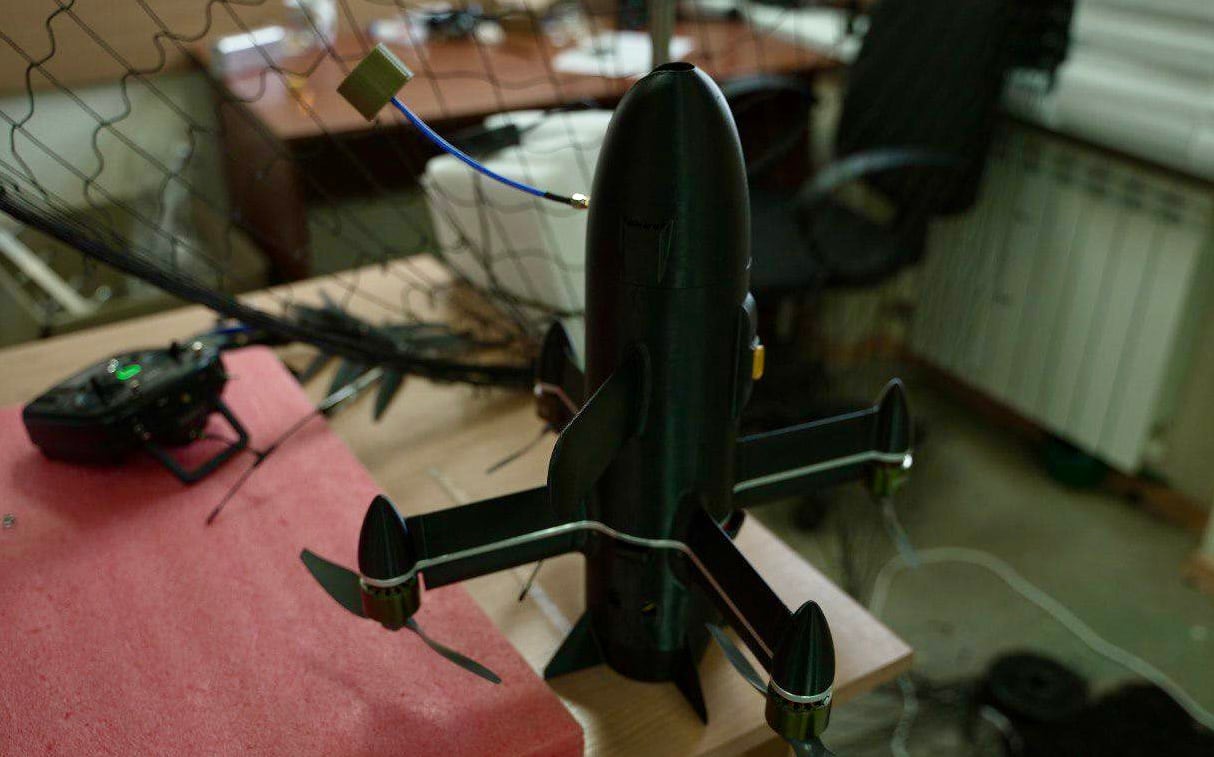
This interceptor drone is capable of flying at speeds of 310 kilometres per hour and is designed to carry explosives that detonate upon impact with the target drone. (Serhii Moos/CBC)
‘A bullet with wings’
At a secret location in the Kyiv region, where a frayed Russian flag serves as a doormat, Sych and Danylo Kholiavko, the founder of the UV military cluster, showcase the functionality of one of their interceptor models.
The body frame is 3D printed, and its design, which Sych describes as resembling “a bullet with wings,” draws inspiration from racing drones previously utilized by Red Bull.
Kholiavko presents a model capable of exceeding speeds of 300 kilometres per hour and equipped with a thermal camera for detecting Shahed drones, which are often launched during nighttime.
When deployed, the drone carries explosives. It can be detonated remotely or explode on contact upon crashing into the target drone.
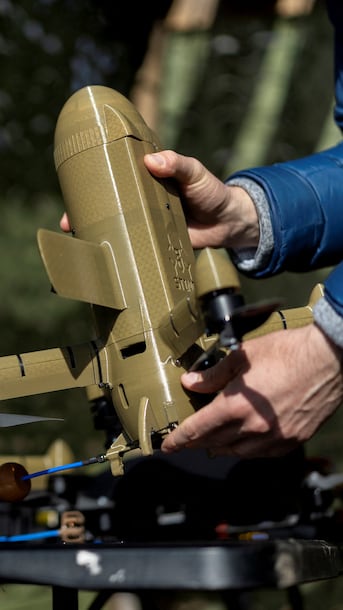
Private Ukrainian firms are receiving inquiries from various countries in the Middle East, including Qatar, Saudi Arabia, and the UAE, seeking interceptor drones. These cost-effective weapons are necessary to counter Iran’s Shahed drones as the conflict between the U.S. and Israel escalates with Iran.
Depending on the model, the cost of an interceptor is approximately $2,000 US, but Kholiavko indicated that there are additional costs for the ground station, which includes radar, and the personnel operating it.
“With three years of experience in intercepting [Shahed] drones, we understand how challenging it can be,” Kholiavko remarked.
“The initial six months were particularly tough, and we did not manage to intercept any drones.”
He noted that the situation improved after they developed effective tactics and coordinated efforts with ground crews.
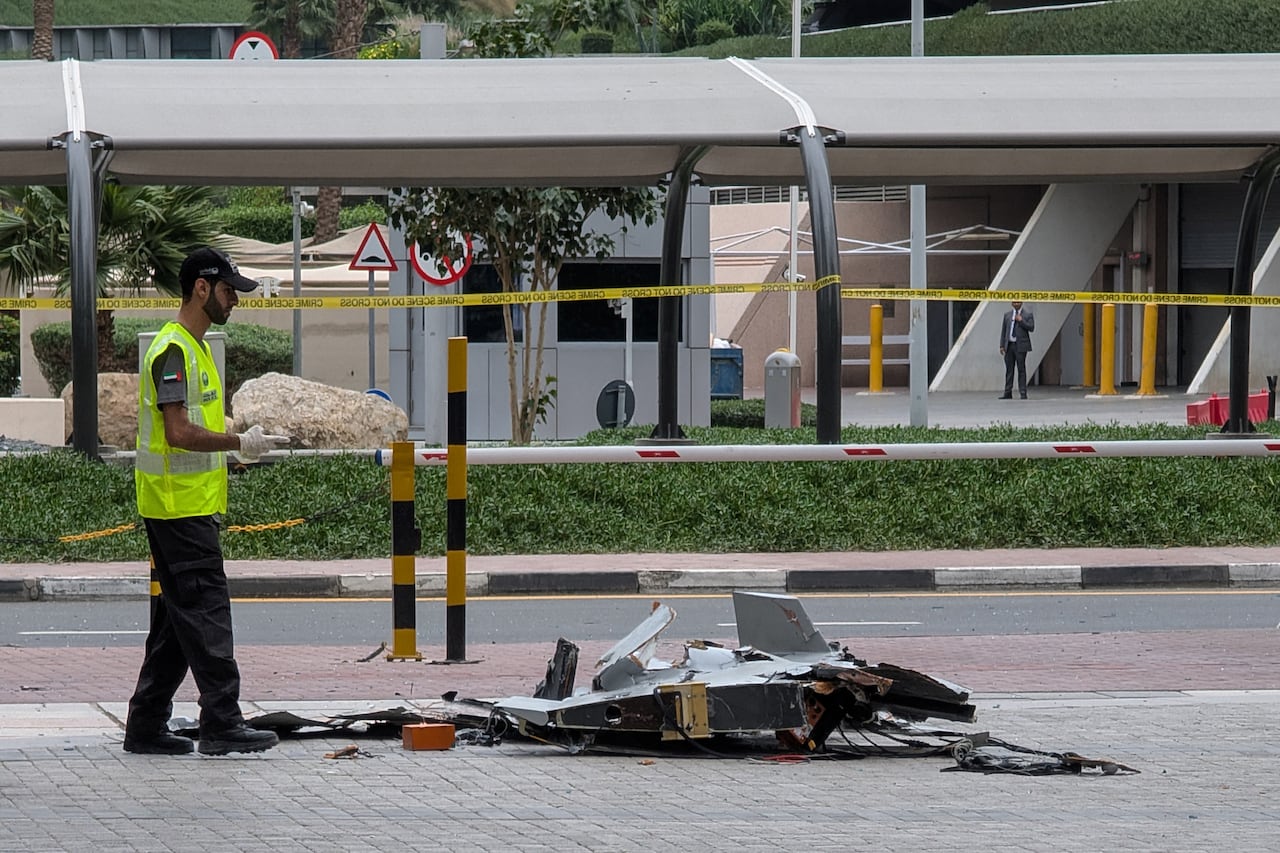
A police officer examines the debris of a drone in downtown Dubai on March 12. (AFP/Getty Images)
Advancing technology
Sych explained to CBC News that there are essentially three operational modes for interceptors.
Some interceptors are piloted entirely from the ground by an operator wearing goggles that provide a view from the drone’s camera. Other models feature software that enables the drone to autonomously track and engage targets after being launched by a pilot.
A third type, which Sych mentioned he has not seen in action, operates completely autonomously. Once a target is identified, it will launch itself.
“The most crucial aspect of the entire process is the personnel and their training,” he emphasized.
“Even the most advanced automatic UAV can still result in zero interceptions if the operators are not skilled.”
The UV military cluster claims it can manufacture around 7,000 interceptors each month.
-
Higher, faster, more destructive: Upgraded Russian drones wreak havoc on Ukrainian cities
-
In Ukraine, expect to see more ground drones on the battlefield to keep soldiers safe
Earlier this week, during his visit to London for discussions with U.K. Prime Minister Keir Starmer, Zelenskyy reported that considering all of Ukraine’s drone manufacturers, the country is capable of producing approximately 2,000 interceptors daily.
He noted that Ukraine needs about half of this output for its self-defense, but the remainder could be sold if these nations agree to support Ukraine.
Kyiv is already collaborating with Germany, Britain, Denmark, and the Netherlands on joint drone production and will soon finalize an agreement with Norway.

