
Following the initiation of Operation Epic Fury and Operation Roaring Lion by the U.S. and Israel on February 28, which resulted in the elimination of significant Iranian leadership, Iran’s Foreign Minister Abbas Araghchi took to social media to express his resolve.
“Bombings in our capital do not affect our capability to wage war,” he declared on X. “Our Decentralized Mosaic Defense empowers us to determine when—and how—conflict will conclude.”
This defensive strategy, referred to as Iran’s “mosaic defense” doctrine, was partly formulated as a countermeasure to U.S. military actions in Iraq and Afghanistan.
“[Iran] understood that when the U.S. engages in warfare, its primary focus is on command and control,” explained Michael Connell, an authority on Iran’s military and a research scientist at CNA, a Washington DC-based nonprofit research organization.
In a defensive posture, Iran aimed to ensure that, in the event of a conflict with the U.S., their military capabilities would remain intact, even if their central command was compromised, Connell noted.
The strategy was to grant varying degrees of autonomy to provincial military units, allowing them to initiate offensive actions if the central leadership were incapacitated.
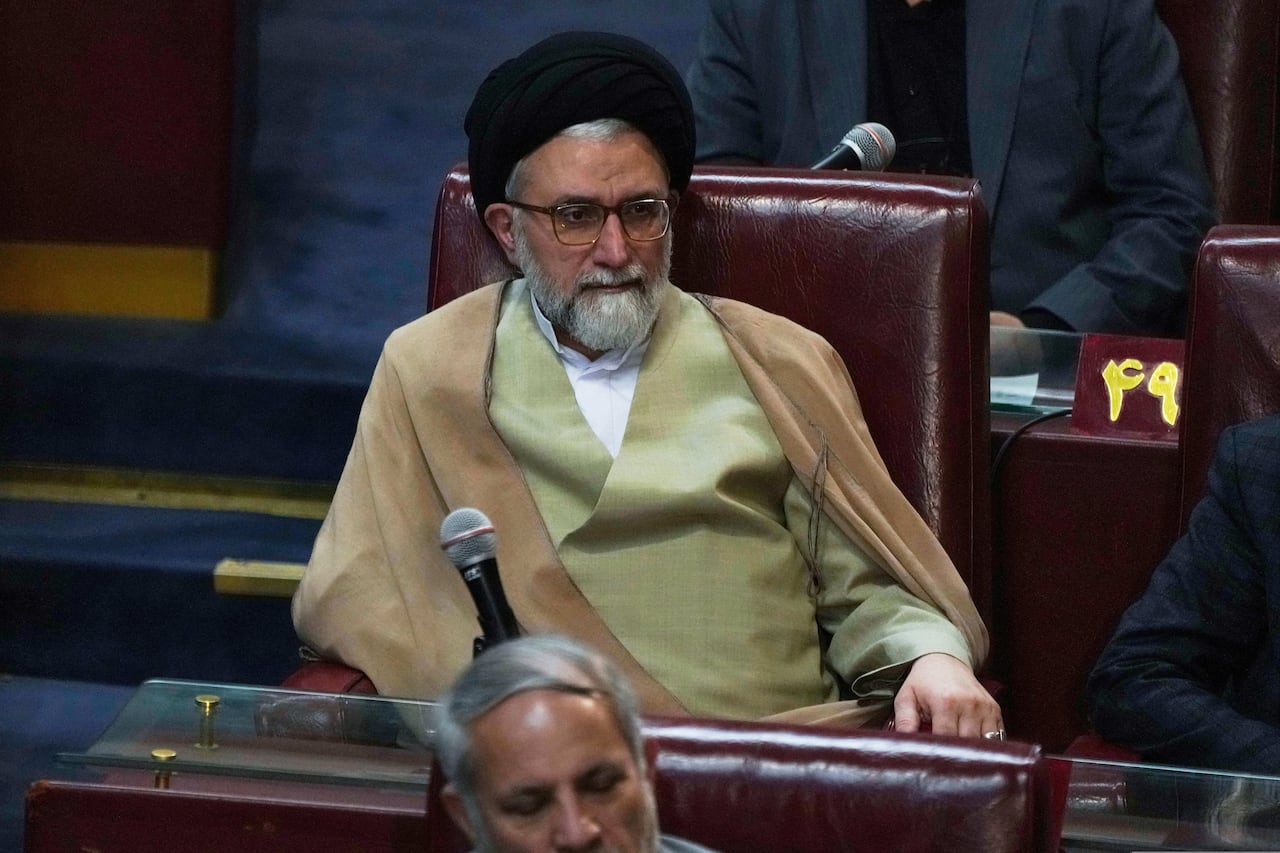
Iranian state television confirmed the death of Intelligence Minister Esmail Khatib. (Vahid Salemi/The Associated Press)
Currently, Israel has been actively targeting and removing key military and security figures from Iran. This campaign has thus far included: Supreme Leader Ayatollah Ali Khamenei; Ali Shamkhani, head of the National Defence Council; Mohammad Pakpour, commander of the Islamic Revolutionary Guard Corps (IRGC); Defence Minister Aziz Nasirzadeh; and Sayyid Abdolrahim Mousavi, chief of staff of Iran’s armed forces.
Just this week, Israel also killed three additional figures: Iranian Intelligence Minister Esmail Khatib; Gen. Gholam Reza Soleimani, head of the Revolutionary Guard’s all-volunteer Basij; and senior Iranian security official Ali Larijani.
Nevertheless, Iran continues to launch missiles, prompting inquiries about whether its mosaic defense strategy has allowed the nation to persist in combat despite the loss of its top leaders.
What is the mosaic defense strategy?
General Mohammad Jafari, then head of the IRGC’s Centre for Strategy and later appointed commander of the IRGC, was the principal architect of this strategy.
The approach involved reorganizing the command and control structure into a network of 31 distinct commands—one for Tehran and one for each of Iran’s 30 provinces, Connell noted in a 2010 report for the U.S. Institute of Peace.
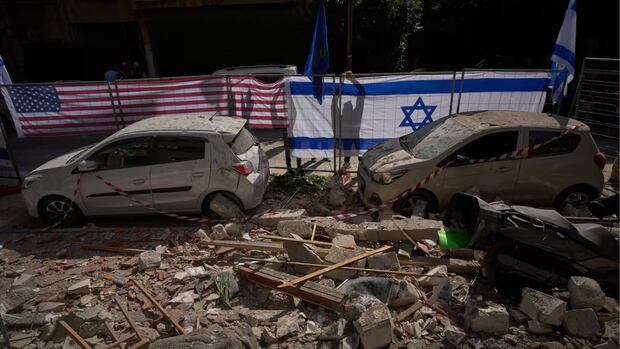
Iran’s state television aired a warning to attack oil infrastructure in Qatar, Saudi Arabia, and the United Arab Emirates. Iran alleges that its oil facility in South Pars was struck on Wednesday, and confirmed the death of a high-ranking intelligence official.
Connell stated that Iran opted to decentralize its command and control to empower lower-level commanders to react to developments on the ground if they lost contact with Tehran and central authorities.
Nicholas Carl, a fellow at the American Enterprise Institute focusing on Middle Eastern political and security matters, noted that this allowed each provincial unit to mount its own “guerilla defense against invaders, rather than awaiting instructions from the top.”
How is the doctrine functioning in this conflict?
Connell remarked that the ongoing operations have been diminishing Iran’s capacity to launch simultaneous ballistic missile attacks—indicating they cannot fire numerous missiles at once to overwhelm adversaries—yet Iran continues to conduct strikes intermittently.
“These aren’t large salvos, indicating a degradation of their capabilities, but it also implies that we haven’t completely neutralized their ability to execute these strikes by dismantling command and control,” Connell explained.
“My assumption is they’re likely delegating, based on the observed operations, command and control to lower-echelon commanders to carry out those strikes.”
He noted that while these commanders have some freedom to operate, the situation is not optimal.
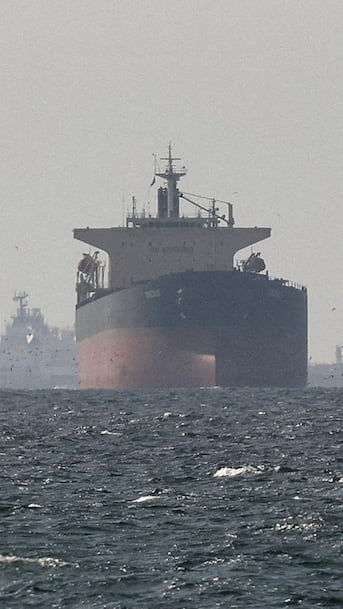
Andrew Chang discusses what is known about Iran’s mine capabilities at sea and explains why they pose a significant and challenging naval threat to eliminate—particularly in a vital shipping corridor.
Ideally, these commanders would coordinate operations seamlessly, ensuring that all military personnel are aware of each other’s actions under centralized management.
“If they are compelled to operate in a fragmented manner, it undermines their effectiveness,” Connell stated.
Heather Williams, a senior policy researcher at RAND and former deputy national intelligence officer for Iran at the National Intelligence Council, suggested that the mosaic defense doctrine likely aids the IRGC in enduring some of the leadership losses.
According to Williams, Iran was able to execute retaliatory strikes with missiles immediately following the February 28 attack that killed the supreme leader, as local IRGC commanders possess significant authority and resources for swift responses.
“They are not required to wait for orders,” she noted.
Carl mentioned that evaluating how effectively the doctrine has supported Iran is challenging due to uncertainties regarding the extent of disruptions to their command and control.
“The fact that Iranian missile forces have managed to maintain daily strikes since the conflict began may itself indicate the mosaic defense’s effectiveness,” Carl commented. “However, at times, the Iranian strikes have seemed somewhat chaotic.”
What are the implications of the deaths of key figures?
Despite the existence of the defense doctrine, Williams asserted that the loss of important Iranian leaders does have a cumulative effect.
“Israel’s focus on these leaders is not only stripping the regime of its ruling class but may also deter other individuals aspiring for prominent positions,” she remarked.
Williams further stated that the regime’s weakening through the removal of some leadership figures could, in several respects, empower the Iranian populace against the regime. U.S. President Donald Trump and Israeli Prime Minister Benjamin Netanyahu have both indicated that their military efforts aim to diminish the regime’s power and provide the Iranian people with an opportunity to rise against it.
“I can’t say for certain that it strengthens them sufficiently to pose a challenge,” Williams expressed.

Michael A. Horowitz, a geopolitical and security analyst, conveyed to NBC News that these targeted killings will likely hinder the efficiency of Iran’s internal operations.
“They can disrupt command, slow decision-making, force successors into hiding, and demoralize both leadership and foot soldiers,” he indicated.
Connell, the expert on Iran’s military from CNA, remarked that there has been some impact, though not necessarily a decisive one.
“It’s not the case that taking out the head of the Basij would result in the Basij collapsing,” he stated.
The significance of the leader may vary, Connell explained, as some figures are less critical to the war effort.
He noted that there is no single person whose absence is so pivotal that it would bring the entire system down.
Williams mentioned that Larijani, for instance, was one of the founding fathers of the Islamic Republic and played a vital role in shaping national security strategy, “but he wasn’t necessarily the one issuing military orders to the troops.”
“I wouldn’t classify Larijani as particularly central to that [military defense] doctrine,” she added.
Danny Citrinowicz, a former leader of the Iran branch of Israeli military intelligence, told the New York Times that while decapitation has its limitations, it remains a notable strategy.
“I don’t believe we’ve fully explored Iran’s capacity to replace those who have been eliminated,” he remarked.
“It’s not that I don’t regard decapitation as an important tactic,” Citrinowicz emphasized. “However, we cannot build a strategy solely around that.”

