
Bones initially believed to be from an ice-age puma or cougar, discovered in the Bluefish Caves and a mine site in northern Yukon, were reclassified through DNA analysis conducted by the University of California. The testing, carried out by Molly Cassatt-Johnstone, a recent lab technician graduate, revealed surprising results. Yukon paleontologist Grant Zazula vividly recalls the moment he received the message informing him that the presumed cougars were, in fact, cheetahs.
Reflecting on the advancements in ancient DNA analysis over the past 25 years, Zazula highlighted the evolution of genetic analysis on permafrost-preserved bones from the Yukon. Cassatt-Johnstone made history by identifying a Yukon Miracinonyx, also known as the extinct American cheetah. She is now the lead author of a paper published in Current Biology that provides new insights into the ice-age cat’s diet and habitat range.
‘A Fascinating Mystery Unraveled’
Contrary to previous beliefs that the American cheetah, resembling today’s agile cheetahs, would have hunted pronghorns in grassy plains, the discovery of these creatures in the Arctic tundra puzzled paleontologists. The absence of pronghorns in Beringia, the region connecting Asia and North America, raised questions about how Miracinonyx survived in such a habitat.
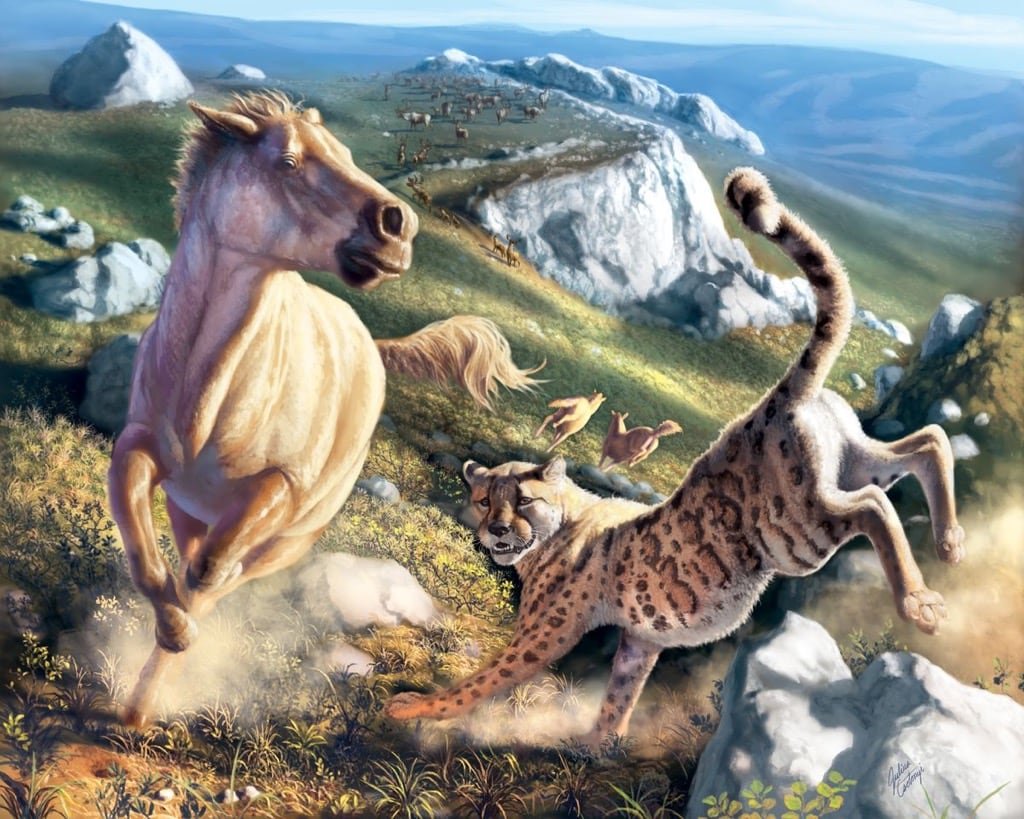
To unravel this mystery, researchers, in collaboration with Canadian and U.S. experts, employed stable isotope analysis, a technique commonly used in forensic investigations to determine dietary patterns and environmental conditions of ancient species. By analyzing bone fragments from the cheetah’s paw and leg, the study revealed the extraordinary preference of Yukon cheetahs for fish, a behavior uncommon among past and present feline species.
The study’s findings astonished experts like Julie Meachen, a specialist in Late Pleistocene mammalian carnivores, who emphasized the unique behavior exhibited by Yukon cheetahs compared to their counterparts in midcontinental North America. In a region teeming with formidable predators, such as Beringian lions and giant short-faced bears, opting for abundant Yukon salmon proved to be a strategic hunting choice for the smaller cheetahs.
Further genetic analysis unveiled that Miracinonyx shared a closer genetic relation with North American pumas than African cheetahs and exhibited low genetic diversity, suggesting limited adaptive potential that may have contributed to their extinction. Zazula proposed renaming this distinctive northern population from ‘American Cheetah’ to ‘Yukon Cheetah’ in light of these significant discoveries.
The continuous revelations from paleontological studies in the Yukon emphasize the ever-evolving nature of scientific knowledge, with each new bone uncovering a fresh chapter in the region’s ancient history.

