
On Thursday, Iran escalated its assaults on the energy infrastructure of its Gulf Arab neighbors, targeting a Saudi refinery along the Red Sea and igniting Qatari liquefied natural gas facilities, along with two Kuwaiti oil refineries. This response came after an Israeli strike on its primary natural gas field.
This development signifies a significant intensification in the Middle Eastern conflict, which has resulted in a surge in global fuel prices.
In Washington, U.S. President Donald Trump indicated that Israel would refrain from further attacks on the South Pars gas field. However, in a social media post late Wednesday, he cautioned that if Iran persisted in targeting Qatar’s energy assets, the U.S. would respond forcefully, potentially “massively blowing up the entire” gas field.
Trump remarked, “I do not wish to endorse such levels of violence and destruction due to the long-term ramifications it will have on Iran’s future.”
On Thursday, a vessel caught fire off the coast of the United Arab Emirates, and another was damaged near Qatar, highlighting the continual peril faced by ships because of Iran’s dominance over the Strait of Hormuz.
-
Iran strikes Qatar energy hub following attack on its Pars oil field
-
Intensified Israeli airstrikes in Beirut demolish a 10-storey building and damage bridges
Saudi Arabia had started directing large oil shipments westward to bypass the strait and transport it from the Red Sea. However, the security of this route was compromised following Iran’s drone attack on the SAMREF refinery located in the Red Sea port city of Yanbu.
Qatar, a vital supplier of natural gas to global markets, reported that firefighters extinguished a fire at a significant LNG facility that was struck by Iranian missiles. Although production had been previously halted due to earlier assaults, the recent missile barrage caused “considerable fires and extensive damage.”
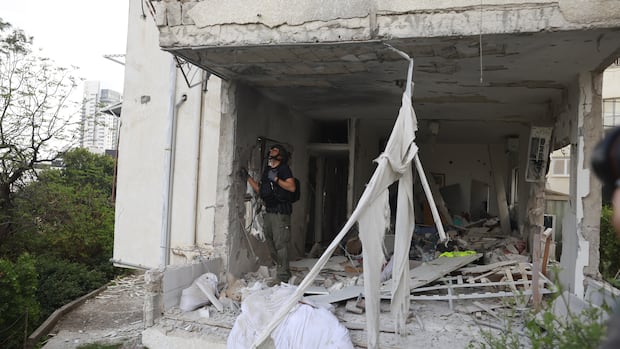
Iran launched a series of airstrikes on Wednesday, resulting in the deaths of two individuals near Tel Aviv. Israel alleges that Iran is employing cluster munitions, which are more difficult to intercept.
Damage to the facility may hinder Qatar’s ability to deliver its supplies to the market, even post-conflict.
A drone assault on Kuwait’s Mina Al-Ahmadi refinery ignited a fire but did not result in any injuries, according to the state-run KUNA news agency. This refinery is among the largest in the Middle East, boasting a petroleum production capacity of 730,000 barrels per day.
Officials in Abu Dhabi announced the suspension of operations at the Habshan gas facility and Bab field, labeling Iran’s overnight attacks on these sites as a “dangerous escalation.”
‘Uncontrollable consequences’
The Iranian strikes were condemned by Qatar, Saudi Arabia, and the United Arab Emirates, with the Saudi foreign minister stating that the attacks on the kingdom have completely shattered any remaining trust.
During morning trading, Brent crude oil, the global benchmark, surpassed $110 US per barrel, reflecting an increase of over 50 percent since the onset of the war on February 28, marked by strikes on Iran by Israel and the United States.
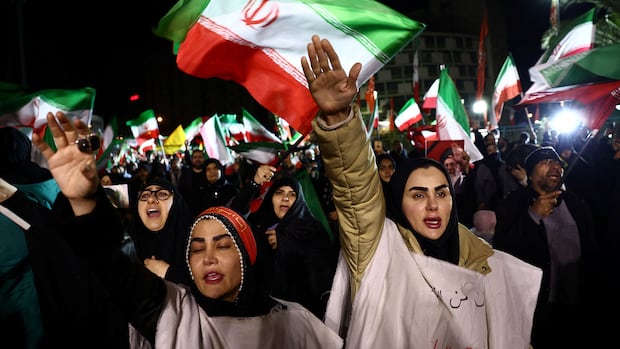
Iran has pledged to retaliate following the assassination of another senior official, while Israeli attacks on the massive South Pars gas field have further escalated global energy concerns.
The series of Iranian assaults followed Israel’s attack on South Pars, recognized as the world’s largest gas field located offshore in the Persian Gulf, shared by Iran and Qatar.
Given that approximately 80 percent of Iran’s power generation relies on natural gas, as reported by the Paris-based International Energy Agency, this attack poses a direct threat to the nation’s electricity supply. Natural gas is also essential for residential heating and cooking throughout the country.
The strike on the gas field represents a “clear escalation of the conflict,” according to the Soufan Center, a think tank based in New York.
The center further stated, “Israel’s target selection in this conflict has heavily focused on institutions, leaders, and infrastructure… It now aims to exert additional pressure on the regime by making civilian living conditions unbearable.”
Iran condemned the attack on South Pars, with President Masoud Pezeshkian warning of “uncontrollable consequences” that could “envelop the entire world.”
Vessels ablaze
Qatar Energy reported on X that a missile strike on its large Ras Laffan LNG facility caused a fire early Thursday.
Additionally, a ship was struck off the nation’s coast, as reported by the U.K.’s Maritime Trade Operations (UKMTO) Centre. It remains unclear whether this was a deliberate attack or if it was hit by falling debris while Qatar launched missile interceptors against incoming Iranian strikes.
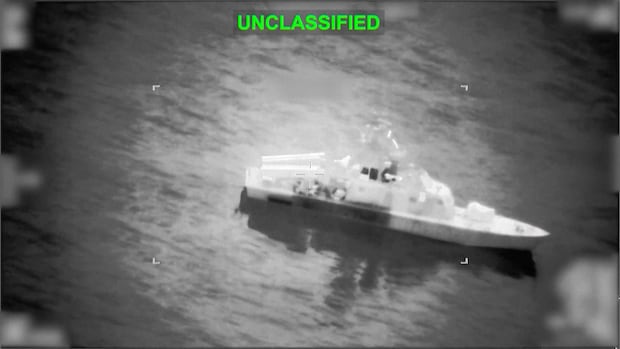
As Iran amplifies its attacks in the Strait of Hormuz, the U.S. expresses confidence in its ability to restore shipping operations. For The National, CBC’s Lyndsay Duncombe explains why reopening this crucial waterway may not be as straightforward, quick, or safe as anticipated by the White House.
Saudi Arabia reported intercepting Iranian drones aimed at its gas facilities overnight, while authorities in Abu Dhabi halted operations at the Habshan gas facility and Bab field following interceptions over those sites.
Another vessel was ablaze early Thursday off the coast of the U.A.E., with uncertainty surrounding whether it was targeted or hit by debris, according to the UKMTO. The vessel was located near Khor Fakkan, close to the entrance of the Strait of Hormuz, which typically sees a fifth of the world’s oil shipments.
Over 20 ships have been attacked during the ongoing conflict, as Tehran maintains a tight control over maritime traffic through the strait leading from the Persian Gulf to the sea.
Iran asserts that the waterway remains open, albeit not for the U.S. and its allies, and while some vessels have navigated through, the number has been minimal.
Rising death toll
Iran has announced the execution of three individuals detained during the nationwide protests in January, marking the first known executions carried out, as reported by the judiciary’s Mizan news agency.
The individuals were accused of fatally stabbing two police officers in Qom, approximately 130 kilometers south of Tehran, during the protests.
The Iranian government suppressed the demonstrations with severe violence, resulting in thousands of fatalities and tens of thousands of detentions, with activists warning that mass executions of detainees could occur.
Human rights advocates have long accused Iran of obtaining coerced confessions from detainees and denying them fair trial rights.
Over 1,300 individuals have lost their lives in Iran amidst the conflict. Israeli strikes have displaced more than one million Lebanese, about 20 percent of the population, according to Lebanese government data, which also indicates that 968 individuals have died.
In Israel, Iranian missile attacks have claimed the lives of 15 individuals, including a Thai agricultural worker who succumbed to shrapnel injuries overnight. Additionally, three people were killed by an Iranian missile strike in the occupied West Bank, as reported by the Palestinian Red Crescent.
At least 13 U.S. military personnel have also been killed.

