
President Donald Trump is working to minimize the impact of the Iran conflict on the U.S. economy, despite American drivers already feeling the financial strain when refilling their vehicles.
At a news briefing in Florida on Monday evening, Trump indirectly acknowledged the surge in crude oil prices globally and the resulting rise in gas prices in the U.S., attributing them to the short-term consequences of the U.S.-Israeli military actions against Iran.
He stated, “In the long term, the security of oil supplies will significantly improve without the threats posed by Iranian military capabilities, leading to lower oil and gas prices for American households.”
Trump’s assurance of lower energy prices resulting from the conflict underscores the current significance of living costs in U.S. politics and his awareness of the potential repercussions of sustained cost hikes on public sentiment.
Dan Cassino, a polling expert and government and politics professor at Fairleigh Dickinson University, highlighted the impact of gas price increases on U.S. drivers, emphasizing that gas prices are a tangible indicator of rising living expenses for most Americans.
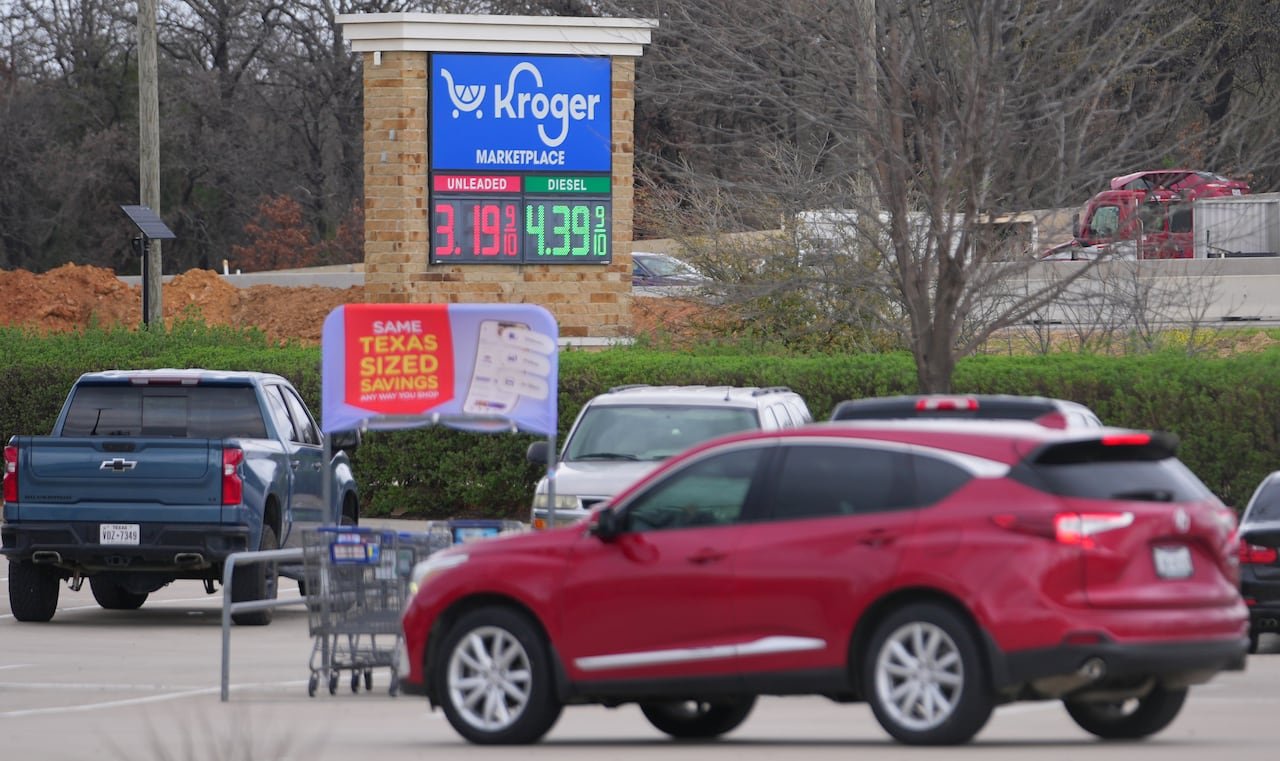
Gas prices are visible on a sign at a Kroger grocery store in Arlington, Texas on Monday. (Julio Cortez/The Associated Press)
On Monday, the national average gas price reached $3.48 US per gallon, marking a 48-cent increase from the previous week, as reported by automotive and travel firm AAA.
This surge surpasses the most significant weekly rise observed during Russia’s conflict with Ukraine in March 2022, when prices spiked by 45 cents per gallon.
Broader Implications Beyond Gas Prices
Cassino emphasized that the political repercussions for Trump and the Republican Party hinge on how long prices remain elevated and the extent to which the broader U.S. economy is affected in the coming months.
With midterm elections approaching in November, a potential loss of control of Congress by the Republicans could constrain Trump’s agenda for the remainder of his term.
“Democrats are eager to attribute any gas price increase to President Trump’s war efforts in Iran,” noted Cassino.

